

Trendyol Süper Lig Standings
2026/27| # | Team | P | W | D | L | GF | GA | GD | Pts |
|---|---|---|---|---|---|---|---|---|---|
| ALAlanyaspor | 0 | 0 | 0 | 0 | 0 | 0 | 0 | 0 | |
| AMAmed SK | 0 | 0 | 0 | 0 | 0 | 0 | 0 | 0 | |
| BJKBeşiktaş | 0 | 0 | 0 | 0 | 0 | 0 | 0 | 0 | |
| RZÇaykur Rizespor | 0 | 0 | 0 | 0 | 0 | 0 | 0 | 0 | |
| ÇRÇorum FK | 0 | 0 | 0 | 0 | 0 | 0 | 0 | 0 | |
| ERErzurumspor FK | 0 | 0 | 0 | 0 | 0 | 0 | 0 | 0 | |
| EYEyüpspor | 0 | 0 | 0 | 0 | 0 | 0 | 0 | 0 | |
| FBFenerbahçe | 0 | 0 | 0 | 0 | 0 | 0 | 0 | 0 | |
| GSGalatasaray | 0 | 0 | 0 | 0 | 0 | 0 | 0 | 0 | |
| GAGaziantep FK | 0 | 0 | 0 | 0 | 0 | 0 | 0 | 0 | |
| GBGençlerbirliği | 0 | 0 | 0 | 0 | 0 | 0 | 0 | 0 | |
| GÖZGöztepe | 0 | 0 | 0 | 0 | 0 | 0 | 0 | 0 | |
| İBFBaşakşehir | 0 | 0 | 0 | 0 | 0 | 0 | 0 | 0 | |
| KSMKasımpaşa | 0 | 0 | 0 | 0 | 0 | 0 | 0 | 0 | |
| KOCKocaelispor | 0 | 0 | 0 | 0 | 0 | 0 | 0 | 0 | |
| KONKonyaspor | 0 | 0 | 0 | 0 | 0 | 0 | 0 | 0 | |
| SAMSamsunspor | 0 | 0 | 0 | 0 | 0 | 0 | 0 | 0 | |
| TSTrabzonspor | 0 | 0 | 0 | 0 | 0 | 0 | 0 | 0 |
The Süper Lig table above shows all eighteen clubs sitting on zero points, zero goals and zero games played, which is exactly what a table looks like a few weeks before the first whistle of a new season. Every club is level, every fanbase is convinced this is their year, and nobody has been embarrassed yet. It is the only moment in the calendar when Amed SK and Galatasaray share the same line.
Turkish football lives and dies by this table. A league table in Turkey is not just a record of results, it is a weekly argument on television, a reason for a coach to be sacked in October, and the single number every supporter checks before they check the weather. Understanding how it is built, what the coloured lines on the left mean, and which tiebreakers decide a tie on points will tell you more about the season than any transfer rumour.
This guide covers the mechanics of the standings, the zones that matter, the tiebreaker order that Turkish football uses, and the honest reading of who is realistically fighting for what. If you follow the league from abroad and you want the fixtures and broadcast side too, the 2026/27 Süper Lig fixture guide is the natural companion to this page.
How Points Are Earned and Why the Süper Lig Table Looks the Way It Does
The scoring system is simple and has not changed in decades. A win is worth three points, a draw is worth one, and a defeat is worth nothing. With eighteen clubs in the division, every team plays thirty-four league matches, one at home and one away against each rival, which puts the theoretical maximum at 102 points. Nobody gets close, but the number is worth remembering because it frames what a title-winning total looks like.
In a thirty-four game Süper Lig season, the champion usually lands somewhere in the mid to high eighties. That means roughly twenty-seven or twenty-eight wins with very little slack. Turkish title races have been decided by a single point more than once, and the sides that win are almost never the sides with the flashiest attack, they are the sides that stop dropping points in Sivas on a wet Sunday in February.
The columns tell the rest of the story. P is matches played, W, D and L are wins, draws and losses. GF and GA are goals scored and conceded, and GD is the difference between them. Points sit in the final column because that is the only figure that decides anything by itself. Everything to its left is context, and context is what you use in August when only three matches have been played and the table is still meaningless noise.
One habit worth adopting early is reading points per game rather than raw position, especially when fixtures fall unevenly because of European commitments or postponed matches. A team on sixteen points from seven games is in far better shape than a team on eighteen from ten, even though the table puts the second side higher.
What Each Coloured Zone in the Standings Means
The coloured bars on the left of the table are not decoration. They mark the boundaries that clubs plan their entire budget around, and they change slightly from season to season depending on UEFA coefficient movement and the final decisions of the Turkish Football Federation.
Here is how the zones normally break down:
- First place: the champion of Turkey, with direct entry into the UEFA Champions League group stage in most seasons.
- Second and third place: European qualification, usually a Champions League qualifying route for the runner-up and a Europa League path for third.
- Fourth place: the final European slot, typically leading to Conference League qualifying rounds, and often affected by who wins the Turkish Cup.
- Bottom three places: relegation to the TFF First League, with the clubs promoted from that division taking their place.
Two details catch people out. First, the Turkish Cup winner takes a European place, so if a cup winner has already qualified through the league, the extra ticket slides down the table and a fifth-placed side can end up in Europe. Second, UEFA coefficient changes can add or remove a slot for Turkey between seasons, which is why the fourth position is the most unstable line on the board.
The relegation line has its own psychology. In Turkey, a club sitting sixteenth in March plays a completely different sport from one sitting twelfth. Defensive shells, veteran signings in the winter window and coaching changes all cluster around that boundary, and it makes the last eight rounds of the season some of the most watchable football in Europe.
Tiebreakers: What Happens When Two Clubs Finish on the Same Points
This is where Turkish football differs from most of the leagues people are used to. In England and Spain, the first tiebreaker is goal difference. In the Süper Lig, the first tiebreaker between two level clubs is the head to head record between them, meaning the points taken in their two direct meetings that season.
If those two matches produce identical results, the goal difference from just those two matches is applied next. Only after that do the overall goal difference and total goals scored come into play. It sounds like a technicality until a title or a relegation is settled by it, and in Turkey it has been settled by it.
The practical effect is enormous. A derby win in October is not just three points, it is a stored asset that can be cashed in during May. Coaches in the Süper Lig know this, which is why you sometimes see a side chasing a second goal in a derby they are already winning, or a manager protecting a narrow away lead with a substitution that looks overly cautious on television. They are not being negative, they are banking a tiebreaker.
It also changes how you should read the table mid-season. Two clubs on the same points are rarely in the same position, and the one that has already beaten the other twice is sitting on a hidden advantage the standings do not display. If you follow the officiating side of these tight margins, the explainer on how VAR works covers the reviews that regularly swing these head to head records.
Reading a Table That Is Still Full of Zeros
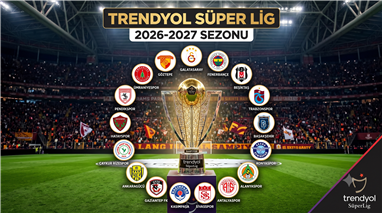
A pre-season table like the one above has no information in it, and pretending otherwise is how people lose arguments in September. What it does show is the shape of the division: which eighteen clubs are in it, who came up, and who is missing after last season. That alphabetical list is the raw material for every prediction you are about to hear.
The useful pre-season exercise is not guessing final positions, it is identifying which clubs have changed the most. A side that has replaced a coach and six starters is a genuine unknown regardless of where it finished last year. A side that kept its spine and added depth is far more predictable, and predictable teams tend to accumulate points steadily in a thirty-four game league.
The first realistic read of the table arrives around matchweek eight or nine. By then every club has faced a mix of strong and weak opponents, home and away, and the sample is large enough that the top four is usually telling you something true. Before that, a team can sit second because it drew Kasımpaşa and Gençlerbirliği in consecutive home games.
There is one exception worth respecting. Clubs that start badly in Turkey rarely recover calmly. Managerial patience is short, and a poor opening ten rounds often triggers a change that resets the season entirely. Early points are not decisive on the table, but they are decisive for job security, and that ends up shaping the table anyway.
The Big Four and the Real Shape of the Title Race
Galatasaray, Fenerbahçe, Beşiktaş and Trabzonspor carry the weight of the league, and any honest reading of the standings starts with them. Between them they account for the overwhelming majority of Turkish championships, and their squad budgets sit in a different bracket from the rest of the division. When the table settles, at least three of them are usually in the top five.
What separates them season to season is rarely talent at the top of the squad. All four sign recognisable names. The difference shows up in squad depth during the weeks when European football is added to the calendar, and in how they handle the away trips to Konya, Trabzon, Sivas and Samsun that quietly drain points from title challengers every year.
Trabzonspor deserves a specific mention because of what a strong Trabzonspor does to the table. When the club from the Black Sea coast is competitive, the title race stops being an Istanbul argument and the point totals at the top drop, because the big sides start taking points off each other in four extra tough fixtures. The seasons where the championship has gone to the final weekend have usually been the seasons where four clubs were live rather than two.
Beşiktaş has been the most volatile of the four in recent years, capable of a run that puts them second and a run that puts them eighth in the same campaign. For readers tracking these clubs from Europe, the guide to Süper Lig broadcasting rights across Europe explains which platform carries these matches in each country.
Promoted Clubs, Anatolian Sides and the Fight at the Bottom
Every season three clubs arrive from the TFF First League with a promotion party behind them and a brutal budget gap in front of them. Historically, roughly half of promoted Süper Lig clubs go straight back down, and the ones that survive tend to share a profile: a settled coach, a defined playing style and a refusal to panic-sign eight players in August.
The clubs in the middle of the table are where the league gets genuinely interesting. Sides like Samsunspor, Göztepe, Konyaspor, Rizespor and Başakşehir operate with a fraction of the resources of the Istanbul giants and still routinely take points from them, particularly at home. Anatolian home form is a real phenomenon in Turkey and it is the main reason the top of the table stays tight.
Watch three specific numbers for any club near the bottom third. The first is home points, because survival in Turkey is almost always built at home. The second is goals conceded, since the sides that go down are usually the ones leaking rather than the ones failing to score. The third is points taken against direct rivals in the bottom six, which under the head to head tiebreaker are worth more than they appear.
The relegation battle is also where the calendar matters most. A club with a favourable closing run of fixtures against mid-table sides with nothing to play for has a genuine structural advantage over a rival that finishes against three of the big four. The table in April rarely reflects that, but the table in May always does.
How the Fixture Calendar Bends the Table Month by Month
A league table is a snapshot, and the picture is distorted by whichever fixtures happen to have been played. In the Süper Lig that distortion is stronger than in most leagues, because European commitments, international breaks and the winter schedule hit clubs very unevenly.
Autumn is when European participants start dropping domestic points. A club playing Thursday night football in Eastern Europe and then travelling to a difficult away ground on Sunday is not the same team that played the previous weekend. The table in November often flatters the clubs without continental fixtures, and it usually corrects itself by February.
The winter break resets more than fatigue. The January transfer window changes squads mid-season, and the second half of a Turkish campaign frequently looks nothing like the first. Clubs that were sinking in December sign three players and pull clear, while others lose their best forward to a European move and never recover the goals.
Derby scheduling matters as well. When Galatasaray, Fenerbahçe and Beşiktaş play each other in a compressed stretch, several positions can move in a single fortnight. Planning your viewing around those dates is the difference between following the season and reacting to it, and the full match schedule and derby dates is worth keeping open alongside the standings.
Following the Standings Live from Abroad
A table only means something if you have watched the football behind it. For the millions of Turkish supporters living in Germany, France, the Netherlands, Austria and the United States, that has always been the hard part, and it is why so many people end up refreshing score apps instead of watching matches.
The legitimate route is a subscription that carries beIN Sports channels outside Turkey, which is what makes live Süper Lig coverage possible in Europe and North America without unreliable workarounds. If you want the practical setup, the walkthrough on watching Süper Lig matches from abroad covers registration, supported devices and what is included.
A few things are worth checking before you commit to any service:
- Whether the package includes the full beIN Sports channel range rather than a single channel.
- How many devices can stream at the same time, which matters on derby weekends in a shared household.
- Whether the service works on the TV platform you actually use, including Smart TV, Apple TV, Android TV and Fire TV Stick.
- Whether coverage is licensed in your country of residence, since unlicensed streams carry real legal and quality risks in most of Europe.
- Whether you also want Turkish entertainment and news channels alongside the football.
For a household where football is the priority, the sports package is the direct option, and the guide on watching Süper Lig in Germany goes into the country-specific details for the largest Turkish community in Europe.
A Pundit's Honest Take on What the Table Will Say in May
Here is my read, and you are welcome to disagree loudly, which is the whole point of a league table. The champion will finish in the mid-eighties, the title will be decided by a head to head result nobody remembers from October, and at least one club that finishes in the top five will have started the season with people predicting mid-table for them.
I would also bet on the gap between fourth and eighth being smaller than the gap between first and second. The Süper Lig has been compressing in the middle for several seasons, with Anatolian clubs recruiting smarter and holding onto coaches slightly longer. That compression is good for the league and terrible for anyone trying to predict European places in February.
The bottom will be settled by home form, as it always is. Whichever promoted club builds a fortress at its own ground survives, and the one that treats home matches like away matches goes back down. It is not sophisticated analysis, it is just what the numbers have said in Turkey for twenty years.
In short, keep the table open, but read it properly. Check the head to head records before you argue about a tie on points, check the fixture load before you write off a club in November, and remember that the standings in August are a list of names, not a verdict.
Frequently Asked Questions
How many teams are in the Süper Lig and how many matches do they play?
The Süper Lig is contested by 18 clubs. Each team plays every rival twice, once at home and once away, for a total of 34 league matches per season and a theoretical maximum of 102 points. Champions usually finish well below that figure, somewhere in the mid eighties.
What is the first tiebreaker in the Süper Lig standings?
Unlike most European leagues, the Süper Lig applies the head to head record first. If two clubs finish level on points, the points taken in their two direct meetings decide the higher position. If those matches are also level, the goal difference from just those games applies, followed by overall goal difference and goals scored.
Why does every team show zero points in the standings right now?
A table showing zeros across every column means the season has not started yet or the first round has not been played. Clubs are listed alphabetically at that stage, so the order carries no meaning until results begin to come in. All it tells you is which clubs are in the division this season.
How many clubs are relegated from the Süper Lig each season?
The bottom three clubs in the final standings are relegated to the TFF First League and are replaced by the promoted sides. The exact structure is confirmed by the Turkish Football Federation ahead of each season, so it is worth checking the current regulations before the campaign starts.
Which Süper Lig positions qualify for European competition?
The champion enters the Champions League route, the runner-up and third place take Champions League qualifying and Europa League places, and fourth place usually leads to Conference League qualifying. The Turkish Cup winner also takes a European slot, so if the cup holder has already qualified through the league, that place slides one position down the table.
How can I watch Süper Lig matches live from abroad?
Live Süper Lig coverage outside Turkey is available through licensed subscriptions that carry beIN Sports channels. These services work on Smart TV, Apple TV, Android TV, Fire TV Stick, mobile and web. A sports focused package suits a football only household, while families who also want series and news channels are better served by a full channel package.
When does the Süper Lig table become a reliable guide to the season?
Around matchweek eight or nine, once every club has faced a mix of stronger and weaker opponents at home and away. Before that point, uneven fixtures and European commitments distort the standings, so points per game is a far better measure than raw position.






Do Comment